How mastering a challenging architectural exercise builds the skills needed for figure drawing
Many students worry when a drawing task takes much longer than expected or feels more difficult than it should. Yet this is often where the most valuable learning happens.
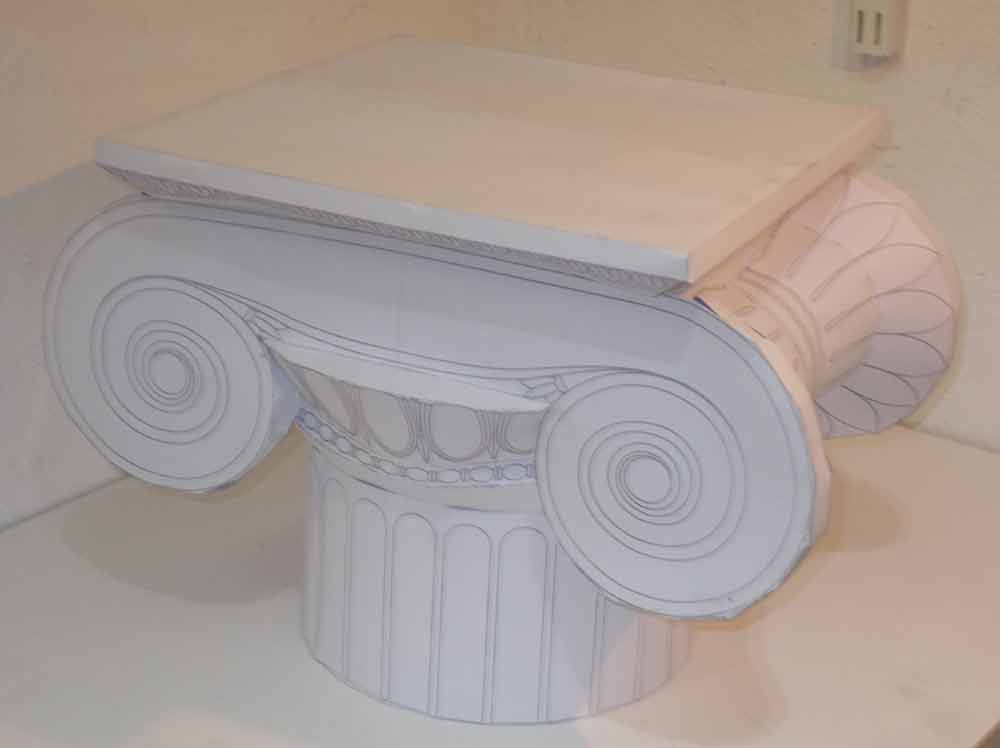
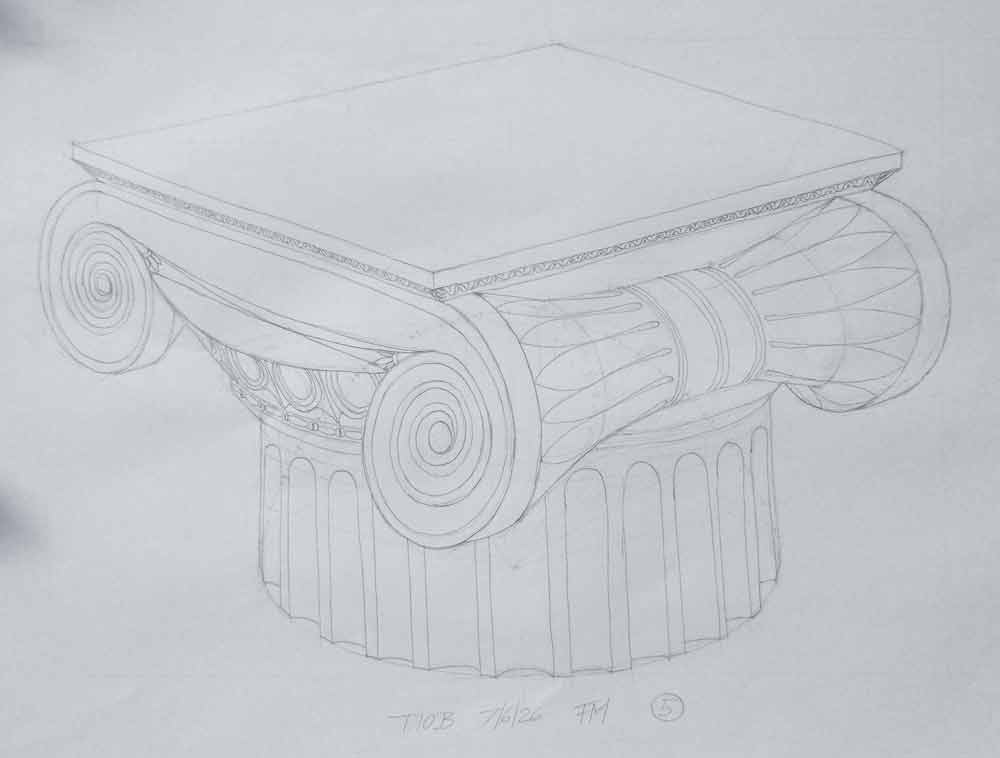
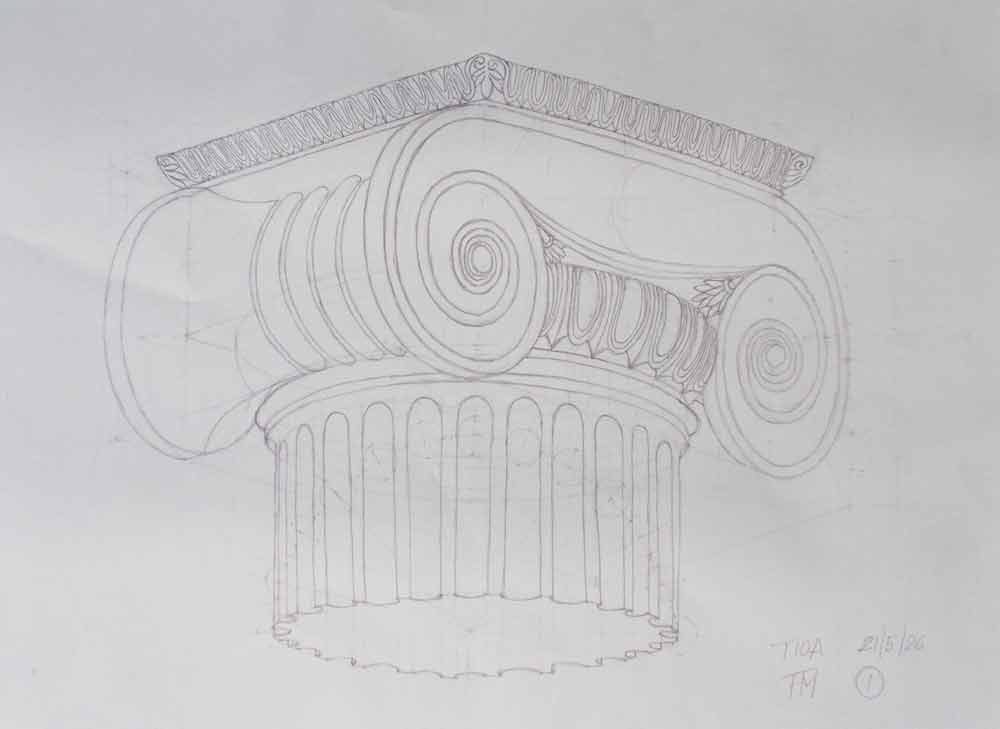
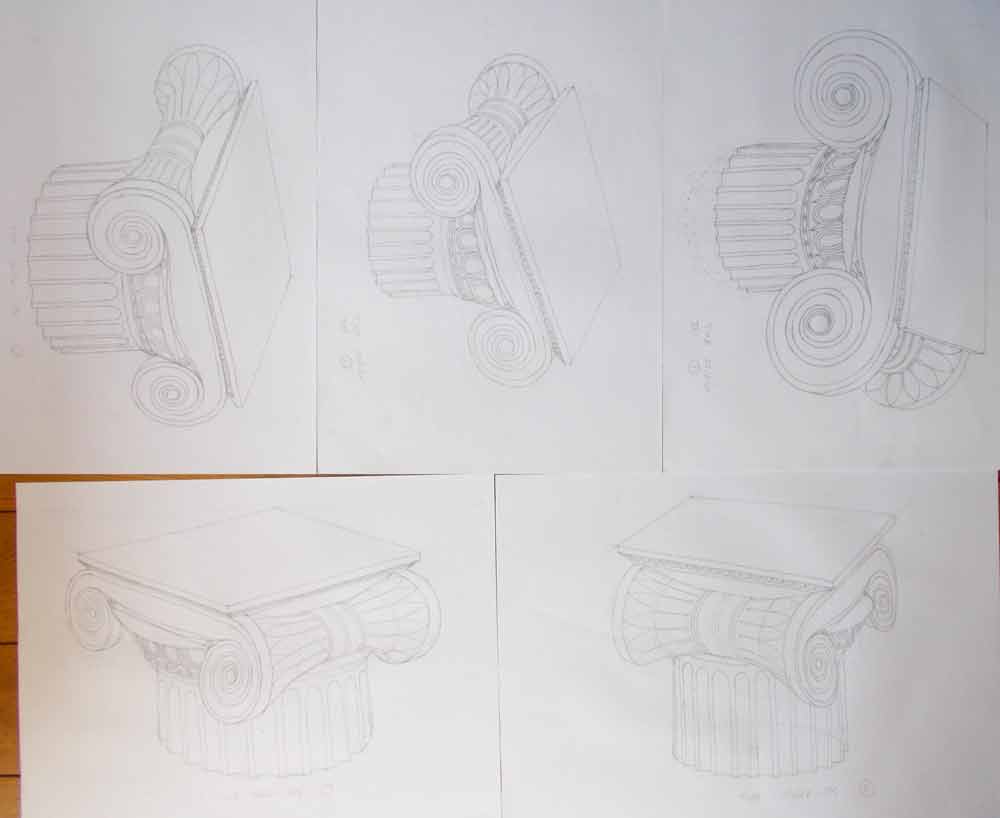
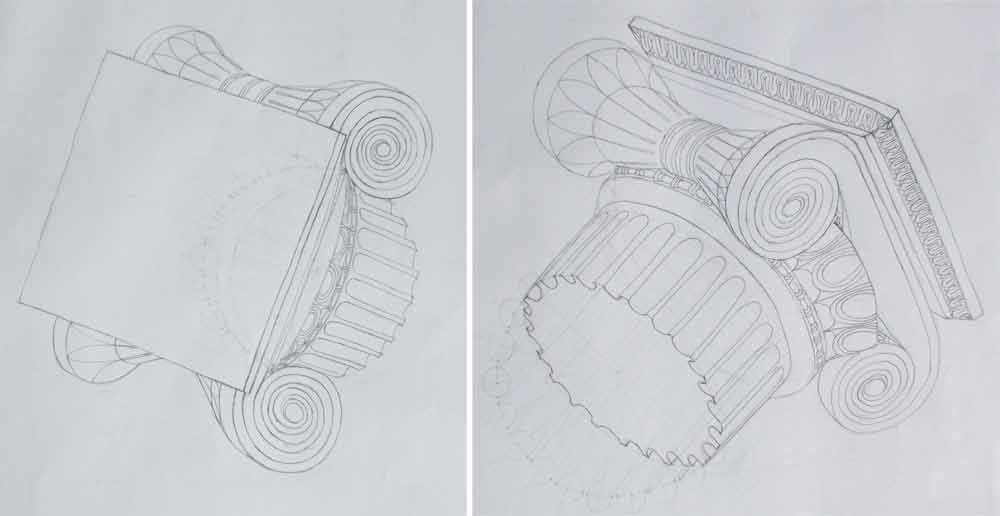
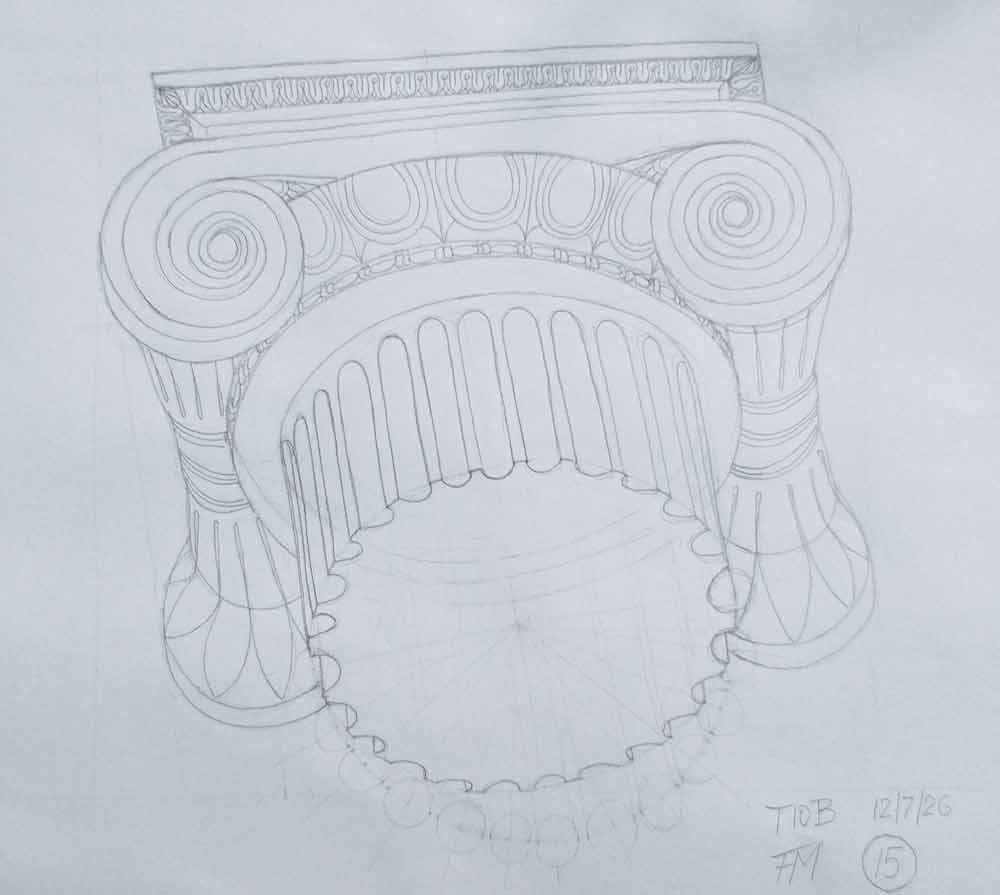
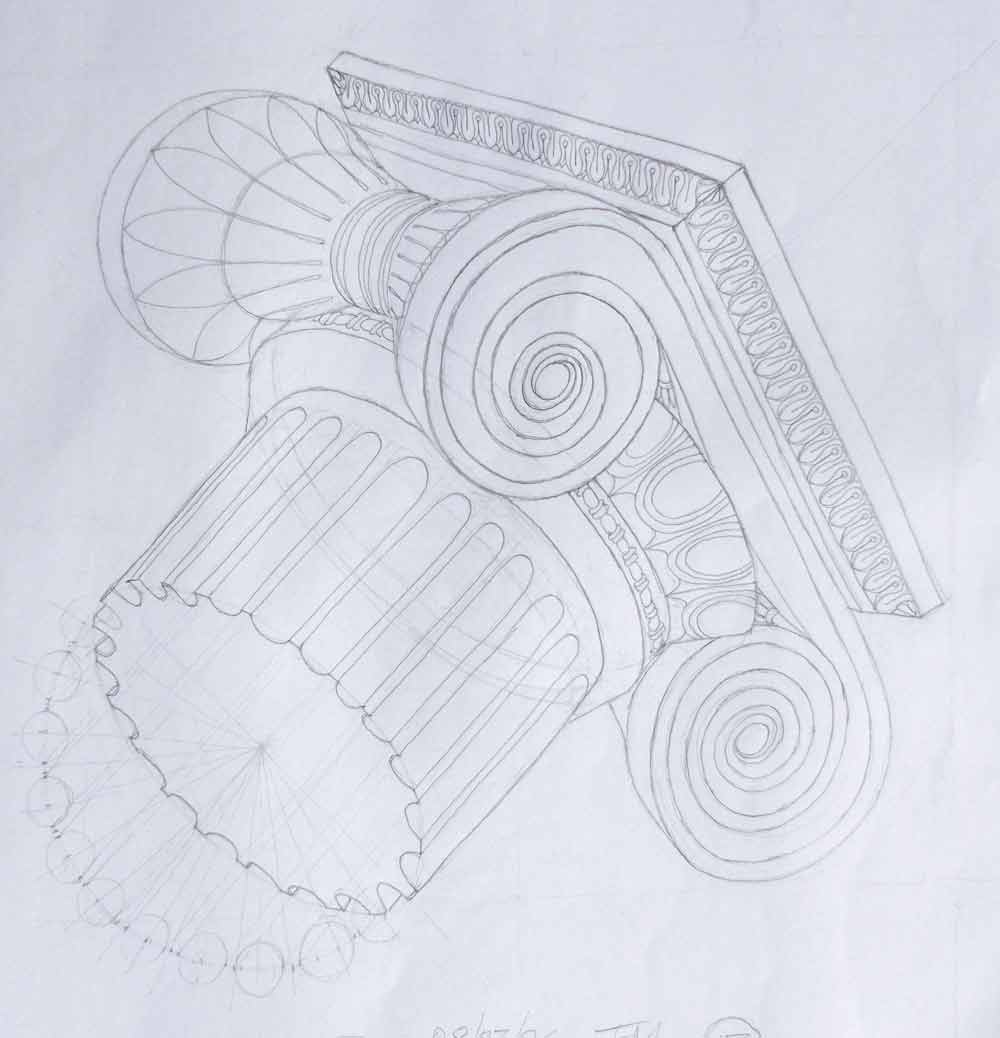
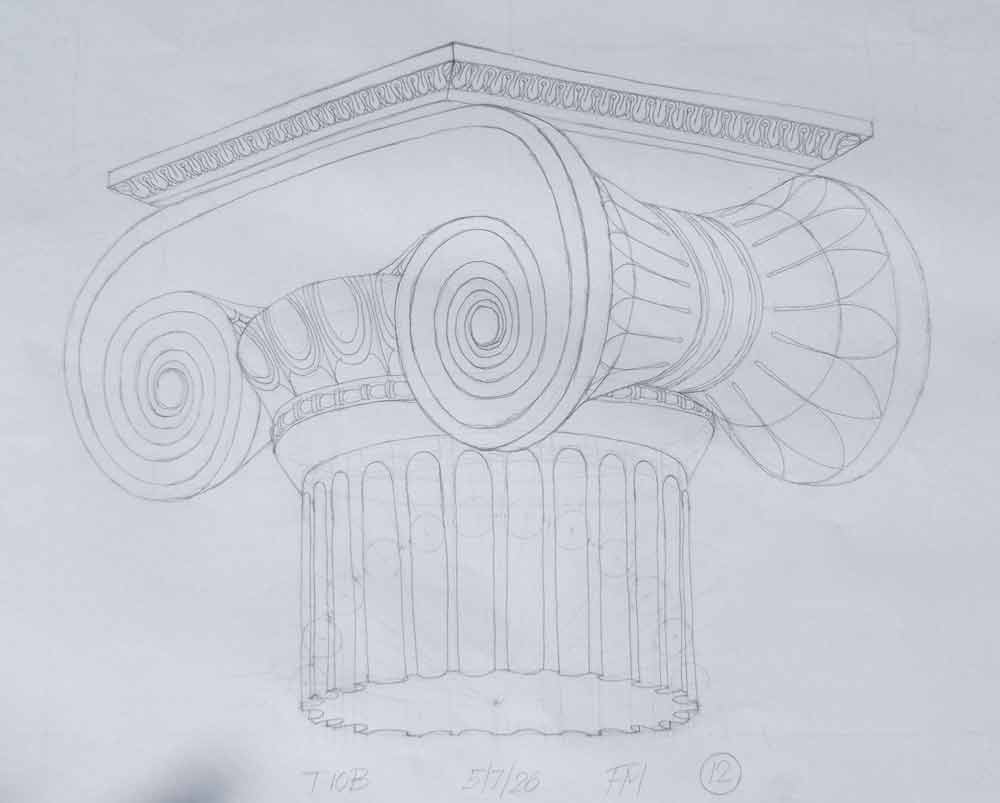
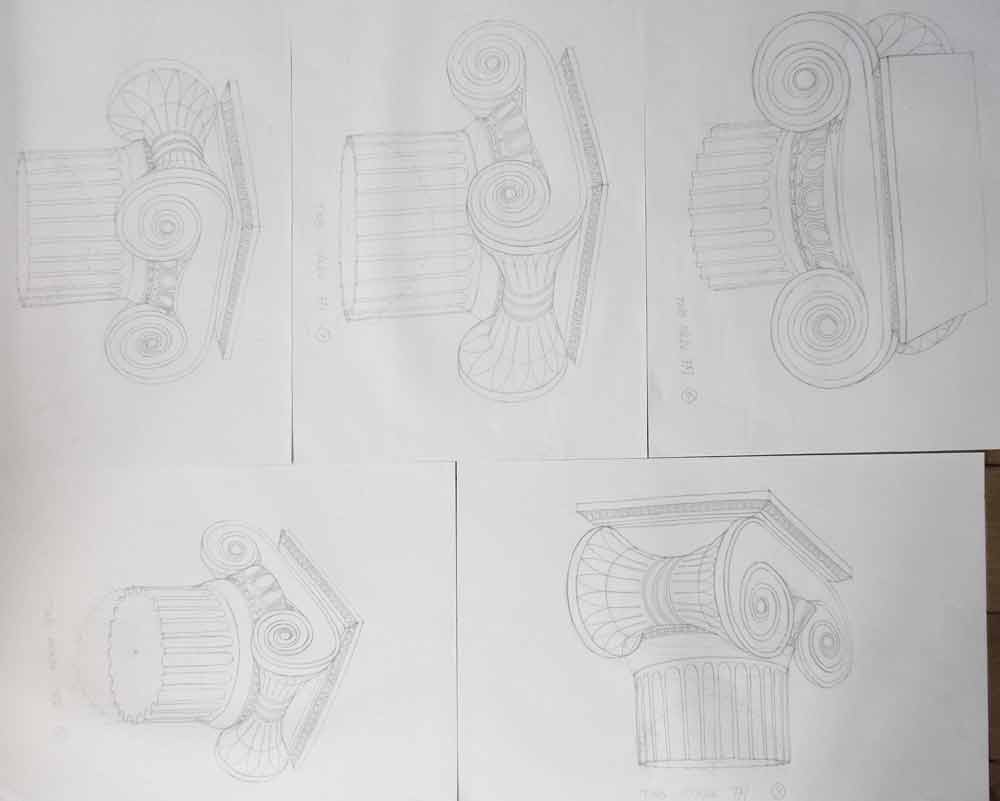
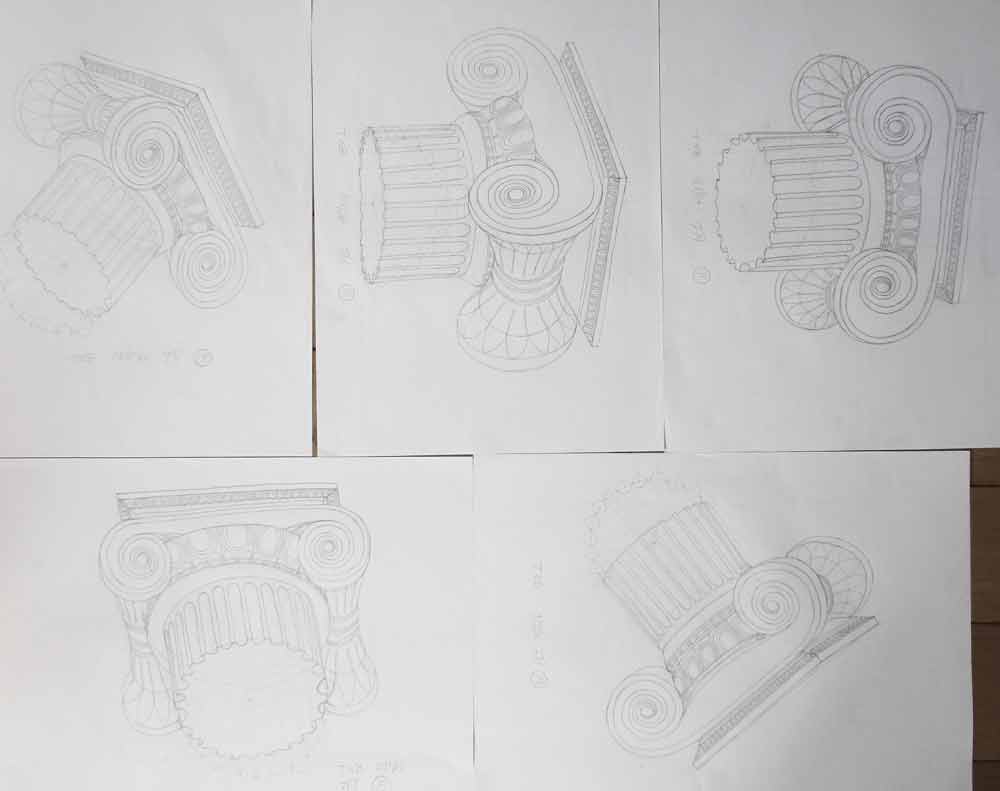
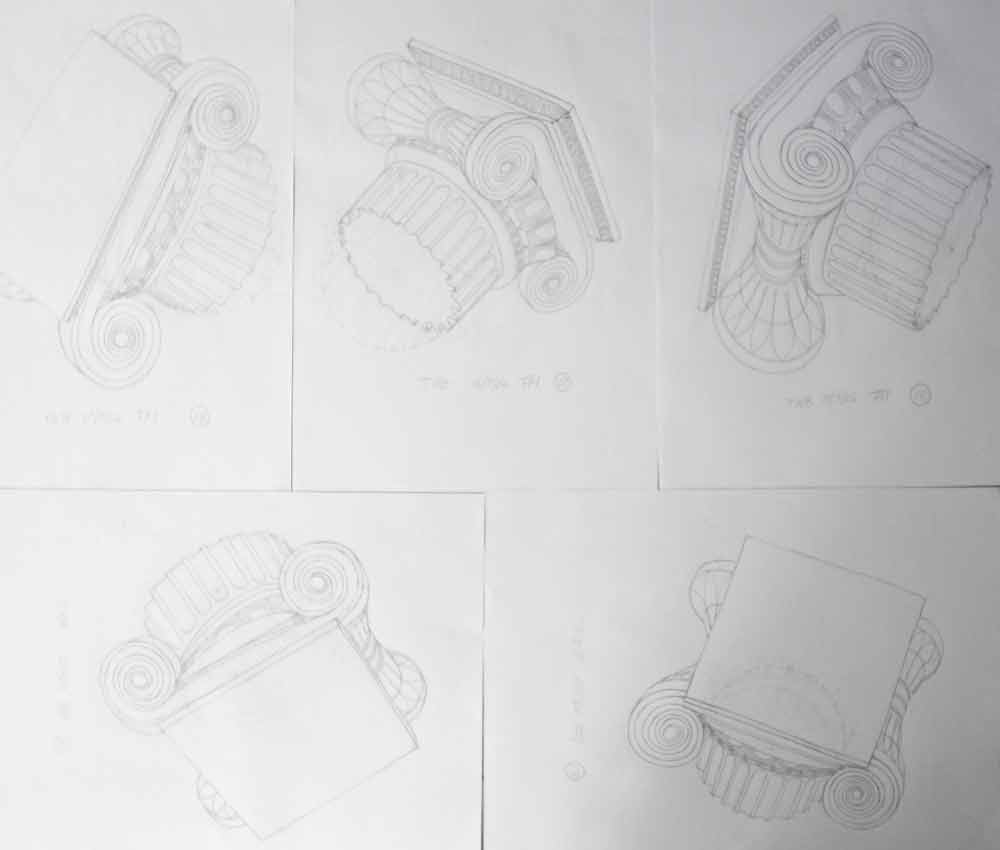
Frank, a student in the Life Drawing Academy Correspondence Course, completed an assignment in which he drew a paper model of an Ionic capital from life. In this course, students receive the model template along with step-by-step instructions and a demonstration on how to draw it constructively and with accurate perspective. This exercise helps students build essential drawing skills in a structured way, progressing from simple to more advanced subjects.
Here is what Frank says:
"I finally got all 20 drawings of the Ionic capital done. I must admit that I had great difficulties with this task. My main problem seems to be accurate measurements. This is especially true when I use a view where there is a lot of foreshortening. I am just worried that if I have so much trouble with a relatively simple object like this capital, how is it going to be if I progress to drawing the figure."
Classical constructive drawing tasks are designed to reveal and correct weaknesses in proportion, measurement, structure, and perspective. An Ionic capital may appear simpler than the human figure, but it is an excellent subject for learning how forms behave in space. It trains the eye to judge relationships accurately and teaches the hand to build forms with logic rather than guesswork.
Foreshortening is one of the great challenges of drawing, and it is far better to encounter and understand it through carefully structured exercises than to struggle with it later in life drawing sessions, where the complexity is far greater and the model will not wait. By mastering these principles in advance, students arrive at figure drawing with a much stronger foundation in perspective, proportion, and construction.
This is why academic art education places such importance on demanding preparatory tasks. The time invested in them pays off many times over. Skills developed through such studies would otherwise take years to build.
Every serious task completed, every mistake corrected, and every challenge understood brings the student one step closer to mastery. With proper instruction and steady effort, drawing skills grow from assignment to assignment, and what once seemed difficult gradually becomes clear and manageable.
That is the strength of a structured course: it guides the student through each challenge in the right order, so that real and lasting progress becomes possible.
Here are Frank's drawings:
To learn good drawing techniques, enroll in the Life Drawing Academy course:
Online Course
A self-study, self-paced course for you to learn fundamental methods of classical drawing and improve life drawing skills by watching video lessons and doing assignments
- Unlimited access to 52 life drawing video lessons
- Lifetime membership without deadlines
- Unlimited support from the Academy tutors
- Constructive critique of your artworks
- Member access to the Academy's Art community
- Place in the Academy's Students Gallery
- Exclusive members-only newsletter and bonuses
- Life Drawing Academy Diploma of Excellence in your name
One-time payment - Lifetime membership
$297 USD
ENROLL NOW
Personal Tutoring Online + Online Course
The ultimate choice if you who would like to receive personal, one-to-one tutoring from the Academy teachers, which is custom-tailored to your skills and needs
- Everything in Online Course, plus:
- Dedicated team of art tutors
- Assessment of your current level of drawing skills
- Personalized curriculum tailored to your skills and goals
- Up to 100 drawing tasks with by-task assessment
- Unlimited one-to-one personal coaching with detailed per-task instructions and feedback
- Artwork critiques and results-oriented guidance
One-time payment - Lifetime membership
$997 USD
ENROLL NOW